Turkish Coffee and Fal: Reading Love in the Cup
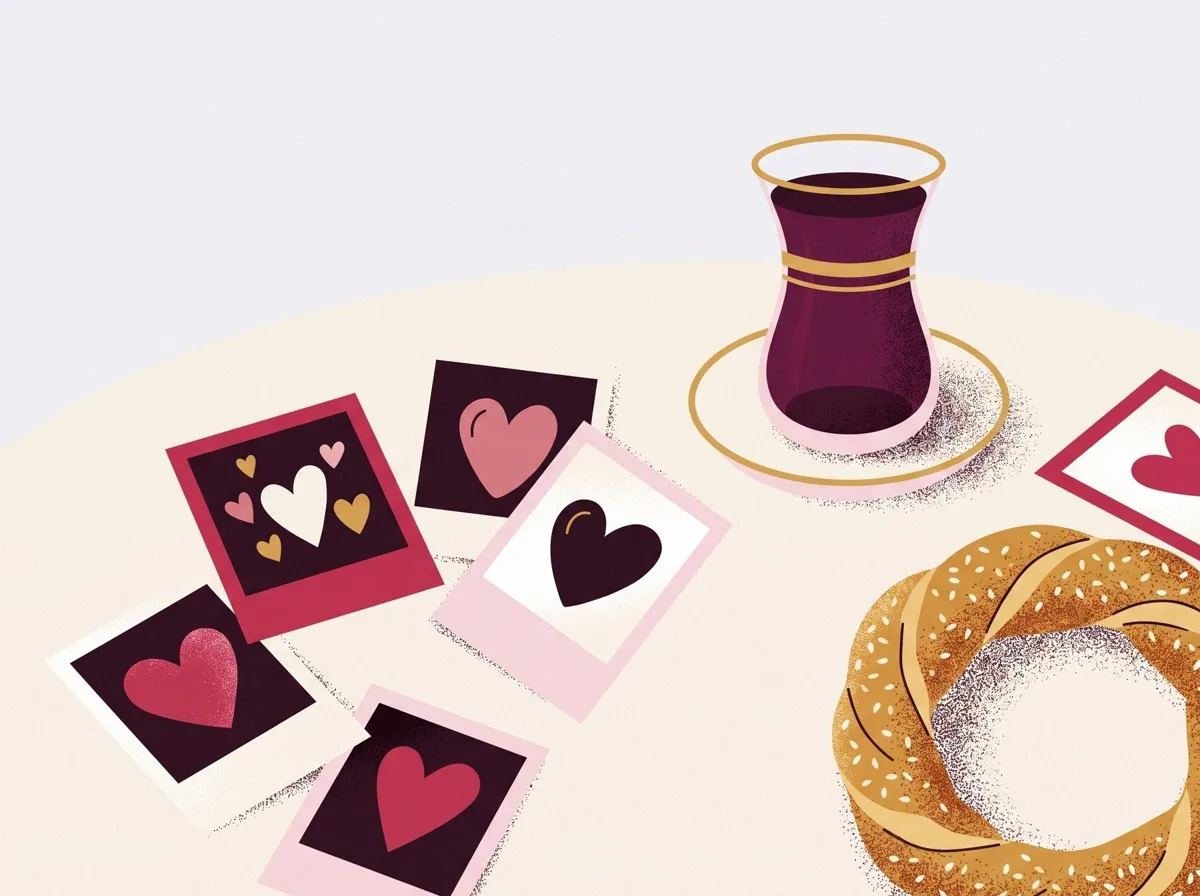
Kahve falı is the Turkish habit of reading your future in the leftover coffee grounds: drink the cup, flip it, let it cool, then look for shapes. A bird means news, a road means a journey, a heart means love is coming.
What is kahve falı and how does it actually work?
Kahve falı is fortune-telling done with the muddy grounds left at the bottom of a cup of Turkish coffee. You finish your coffee down to the sludge, place the saucer on top of the cup, flip the whole thing over, and wait for it to cool. Some people make a wish while they flip. When you lift the cup, the grounds have run down the inside in streaks and blobs, and someone at the table reads the shapes like clouds: a bird here, a road there, a little heart near the rim.
The reading itself is loose and personal. The inside of the cup is usually treated as your near future, the saucer as your home or the people around you, and the bottom as the distant future or things that won't change. A reader looks for recognizable forms and tells you a small story from them. There's no certificate, no fixed rulebook. Your grandmother, your coworker, and a stranger at the next table will all read the same cup slightly differently, and that's the whole charm of it.
Why is Turkish coffee itself such a big deal?
The fal only happens because of the coffee, and Turkish coffee is its own institution. It's unfiltered, finely ground almost to powder, and brewed slowly in a small long-handled pot called a cezve until a layer of foam rises. The grounds stay in the cup, which is exactly why there's something to read at the end. UNESCO added Turkish coffee culture and tradition to its list of the Intangible Cultural Heritage of Humanity in 2013, recognizing it as a social ritual, not just a drink.
That ritual is the point. Coffee in Turkey is rarely a solo to-go cup. It's served in small porcelain with a glass of water and usually a sweet on the side, and it signals that you have time to sit. The old saying goes that a single cup of coffee is remembered for forty years, meaning the friendship made over it outlasts the drink. If you want the wider context of how food, hosting, and courtship fit together, our guide to Turkish dating culture and etiquette walks through the unwritten rules.
What do the symbols in the coffee cup mean?
Readers work from a shared vocabulary of shapes, then improvise around it. The classics show up again and again, and most Turks could rattle off a few without thinking. Here's the short list people reach for first.
| Shape in the cup | Common meaning |
|---|---|
| Bird | News coming your way, often good |
| Road or line | A journey, a move, a decision ahead |
| Heart | Love, a new feeling, an engagement |
| Ring | Marriage or a serious commitment |
| Fish | Luck, money, abundance |
| Snake | A two-faced person, watch your back |
| Tree | Stability, family, a wish taking root |
Position matters as much as the shape. A heart near the cup's rim is read as something arriving soon; the same heart at the bottom is read as something further off or already settled. A clean, open cup is taken as a calm period ahead, while a cup crowded with dark streaks suggests a busy, tangled stretch. Don't overthink the dictionary. A good reader uses the shapes as prompts and reads the person in front of them more than the cup.
Why does love show up in almost every reading?
Ask anyone who reads cups regularly and they'll tell you the questions are almost always about the heart. People want to know if someone is thinking about them, whether a quiet crush will go anywhere, when a marriage might come. So the reader's eye goes straight to the romantic signs: a heart, a ring, two figures standing close, a face turned toward another face.
Half the fun is the supporting cast that appears around the love. A stranger forming in the grounds means someone new is about to walk in. A long road leading to a heart gets read as love that arrives after a trip or a wait. An engagement ring near the rim, and suddenly the whole table is teasing the single cousin. None of it is meant as a verdict. It's a way of saying out loud the thing everyone is already curious about, with the grounds taking the blame if it doesn't pan out.
Can you do fal on a date, and is it any good as flirting?
It's one of the better icebreakers Turkish culture has to offer. Order two coffees, drink them, flip the cups, and now you have a built-in reason to lean in close, hold each other's cup, and narrate a tiny shared future. "I see a road here, are you planning a trip?" is a much softer opening than twenty blunt questions. Even people who don't believe a word of it will play along, because the game gives you permission to talk about feelings sideways.
The flirting works because the reader gets to choose what to notice. Spot a heart and mention it, and you've just told your date that love is on your mind without having to say it plainly. Whether you're meeting over coffee in Istanbul or video-calling between Berlin and Izmir, the ritual travels. For more low-pressure openers, our roundup of Turkish terms of endearment pairs nicely with a cup reading once the conversation warms up.
What about the salty coffee and other fal traditions?
The most famous coffee custom in Turkish romance has nothing to do with reading the grounds. When a family visits to ask for a young woman's hand, the bride-to-be traditionally serves coffee to the groom and his relatives, and the groom's cup gets a heavy dose of salt instead of sugar. He's expected to drink it down without a flinch. The idea is that if he can swallow salty coffee with a straight face to please her, he'll handle the harder things in marriage with the same patience. It's a test wrapped in hospitality, and everyone in the room is in on it.
Beyond that, fal has its own small etiquette. You don't usually read your own cup; someone else reads it for you, which keeps it social. People often won't flip a cup if they're upset, since a bad mood is said to muddy the reading. And the polite closer, once the reading turns gloomy, is the line every reader knows: fala inanma, falsız da kalma, meaning don't believe in the fal, but don't go without it either. That single phrase tells you exactly how seriously to take the whole thing.
Is kahve falı a belief or just a game?
For most people it sits in the comfortable middle. Almost nobody runs their life by the cup, and yet almost everybody has flipped one and listened anyway. It's closer to reading a horoscope with friends than consulting an oracle: a way to spend an unhurried hour, gossip a little, and say hopeful things out loud. The grounds are a prompt for conversation more than a forecast.
That light touch is exactly why it has lasted, and why it crosses borders so easily. A Turkish family in Amsterdam or Vienna will flip cups after Sunday lunch the same way one in Bursa does, and the symbols mean the same thing in every kitchen. If you're looking to meet people who grew up with these rituals, see how Turks abroad stay connected in our piece on meeting Turkish singles abroad.
Kahve falı is one of the easiest doors into Turkish culture: brew real Turkish coffee, drink it, flip the cup, and let the shapes start a conversation. Birds for news, roads for journeys, hearts for love, salt in the groom's cup for patience. Don't take the verdict seriously, take the hour seriously. On a date, it's an unbeatable excuse to lean in and talk about feelings sideways. If you want to flip cups with someone who grew up with the same rituals, Lokum matches Turks by hometown across 81 provinces and 80+ cities worldwide, with verified profiles and privacy controls so you decide who sees you first.